Sale Sold out
Skip to product information
1 of 1

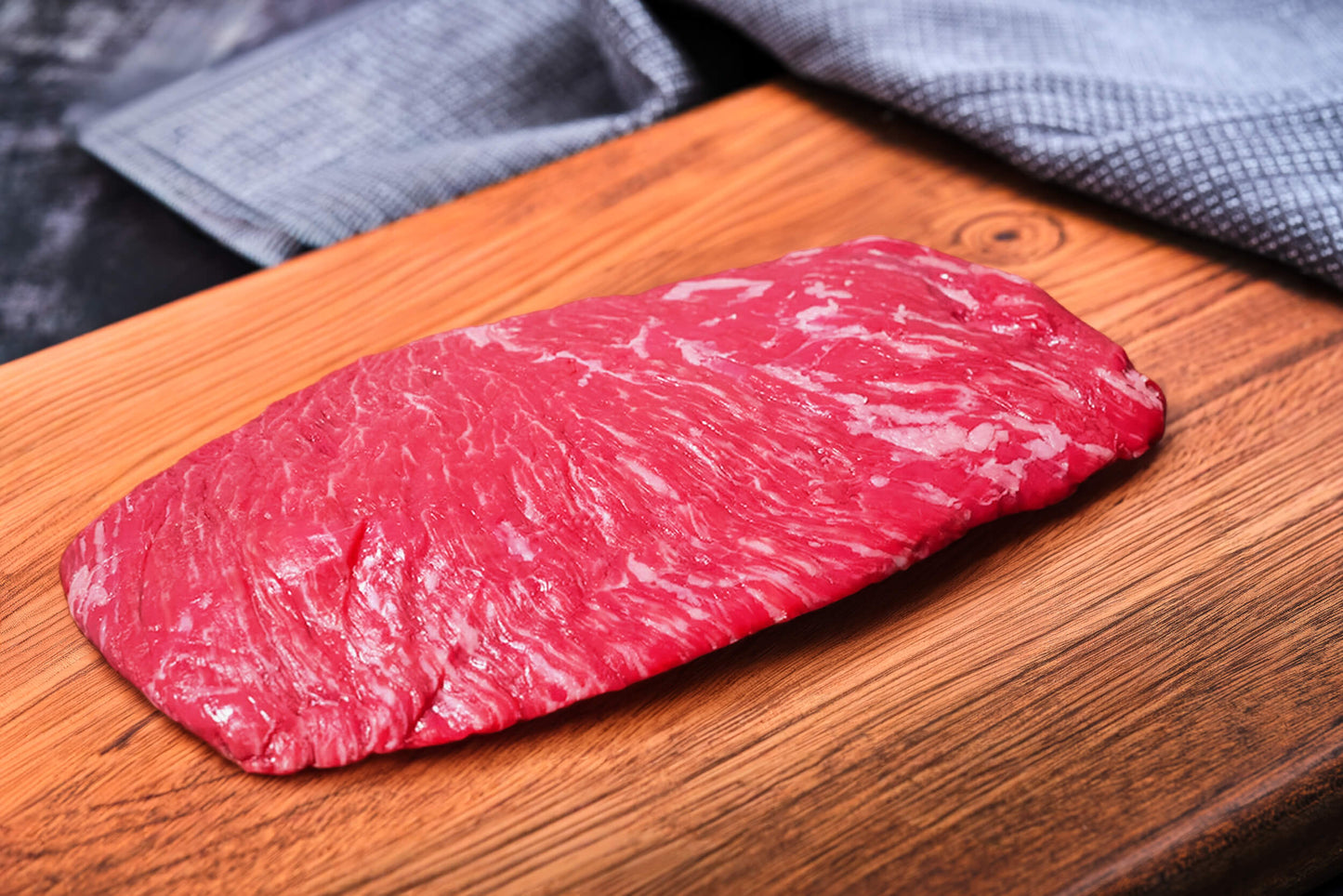
Australian Angus Sirloin Flap (Bavette)

Australia

Prized for its robust character, this Australian Angus Bavette delivers rich marbling, satisfying chew, and deep beefy flavor. Ideal for quick searing or marinating, it offers versatile, steakhouse-quality results with every preparation.

SKU:

Regular price $26
Regular price Sale price $26
View full details

The Australian Angus Sirloin Flap—known as Bavette—delivers steakhouse intensity in a versatile, shareable form. Cut from the flavorful flank primal, this long, grain-running muscle offers rich marbling woven through lean beef, yielding a satisfying chew and deep mineral character that defines bold steak lovers.

Raised across Australia's expansive grasslands by heritage Angus producers, these cattle thrive on natural forage that builds intense beef flavor without excessive fat. The Bavette's unique grain demands slicing against it post-cook, transforming chewy texture into tender, juicy strips perfect for sharing. Each bite reveals layered savor—iron-rich minerality, subtle sweetness from caramelized edges, and clean beef finish.

Vacuum-sealed for flawless delivery, this cut shines for casual gatherings, taco nights elevated, or steak frites that wow without intimidation. Quick high-heat searing preserves its vibrancy; simple chimichurri or bold coffee rubs unlock its potential, making every dinner feel effortlessly sophisticated.

Australian Angus Sirloin Flap (Bavette)

  • Breed: Angus
  • Weight: 12-16 oz
  • Thickness: ½-¾"
  • Tenderness Score: 7/10 (sliced against grain)
  • Cattle Origin: Australia
  • Packaging: Individually vacuum-sealed and frozen

Step-by-Step Instructions for Australian Angus Sirloin Flap (Bavette)

Thaw the Steak Properly

  • Refrigerator thaw vacuum-sealed for 12-18 hours (thin cut thaws fast).
  • Quick: Cold water 45-60 minutes. Avoid room temp—lean grain toughens quickly.

2. Bring to Room Temperature

  • Unwrap and rest 30-45 minutes. Thin profile (½-¾") heats evenly, preventing overcooking edges.

3. Pat Dry and Season Boldly

  • Pat very dry for crust formation.
    Season aggressively both sides with kosher salt, pepper, garlic powder.
  • Bavette loves bold flavors—consider coffee rub or Mexican spices 15 minutes prior.

4. Prepare the Cooking Surface

  • Preheat cast-iron, carbon steel, or screaming-hot grill (500°F+). Bavette demands high heat for exterior char.

5. High-Heat Sear Both Sides

  • Sear 90 seconds per side for rare (125°F), 2 minutes for medium-rare (130°F).
  • Press flat with spatula for even contact. No flipping needed beyond initial sides—grain texture thrives on quick Maillard reaction.

6. Rest Briefly

  • Rest 3-5 minutes on cutting board. Minimal juices to lose due to lean nature.

7. Slice Against Grain and Serve

  • Critical: Slice perpendicular to visible grain into ¼" thin strips.
  • Fan on plate with chimichurri, charred scallions, or steak frites. Transform chew into velvet texture.

Australian Angus Sirloin Flap (Bavette) Recommendations

Cooking Methods

  • Screaming-hot cast-iron sear: 90 seconds per side creates essential crust on lean grain.
  • High-direct grill: Charred exterior, slice thin for tenderness transformation.
  • Wok stir-sear: Asian technique preserves mineral intensity in thin strips.

Seasoning and Herbs

  • Smoked sea salt: Amplifies iron-rich minerality.
  • Cumin, coriander, chili powder: Mexican spices love grain texture.
  • Oregano-garlic rub: Mediterranean char partner.
  • Chimichurri rub (pre-sear): Bright herbs cut chew, enhance char.

Side Dish Recipes

  • Street corn (elote): Creamy spice matches charred intensity.
  • Charred romaine Caesar: Bitter crunch contrasts beefy chew.
  • Frites with malt vinegar: Classic for grainy steak texture.
  • Pickled red onions + feta: Acidic bite transforms richness.

Marinades

  • Lime, cilantro, cumin: 1-2 hours—tenderizes grain while brightening minerals.
  • Soy, ginger, sesame oil: 45 minutes for umami depth without overpowering.
  • Red wine vinegar, oregano, garlic: Italian-style 90 minutes for bold char.

Sauces and Toppings

  • Chimichurri verde: Essential herbaceous acid for grain chew.
  • Roasted garlic aioli: Creamy counterpoint to mineral edge.
  • Poblano rajas: Smoky pepper strips echo grill char.
  • Maltaise sauce (blood orange hollandaise): Citrus brilliance for beef intensity.
  • Aji amarillo sauce: Heat matches intensity.

Drink Pairings

Wine: Tempranillo, Sangiovese

Beer: Mexican lager, saison

Spirits: Mezcal margarita, spicy Paloma

Non-Alcoholic: Mexican Coke, tamarind agua fresca, hibiscus iced tea

Origin Story

Australia’s Angus beef story begins in the early 1820s, when the first black cattle—descended from Scotland’s famed Aberdeen Angus—were shipped from Fife, Scotland to Van Diemen’s Land (now Tasmania). Carefully selected for their hardiness and superior beef quality, these cattle journeyed across oceans, disembarking at the Hobart Town docks in January 1824 under the stewardship of James Foster.​

Through the 19th and early 20th centuries, additional Angus genetics from Scotland, Ireland, and Canada were introduced, gradually establishing Angus herds across mainland Australia—especially in the temperate southern regions where fertile pasturelands mirrored the cattle’s native Highlands.​

Australian Angus quickly gained a reputation for adaptability, ease of calving, and signature marbling, giving rise to a beef industry focused on consistency, eating quality, and sustainability. By the time the Angus Society of Australia was formed in 1919, the breed was firmly established as the nation’s premium choice for beef excellence—a legacy that continues today with Angus beef recognized worldwide for its signature flavor and fine texture.

How to Cook Australian Angus Sirloin Flap (Bavette)

The Australian Angus Sirloin Flap (Bavette) is all about intense flavor and flowing grain, shining brightest under fierce, fast heat that builds a smoky crust while keeping the interior blushing and juicy. This long, thinner cut is made for blazing-hot cast iron, ripping-hot grills, or wok-style searing—techniques that kiss the surface with char in just minutes. Because Bavette’s character lies in its pronounced grain, the real magic happens after cooking: a short rest followed by deliberate slicing across the grain transforms its natural chew into tender, supple strips perfect for sharing. Handled correctly, it delivers a bistro-worthy experience—bold, mineral, and deeply satisfying.

Temperature Table
Prefered Doneness Temperature Cook Time Per Side Rest Time
Rare 120–129°F 1½–2 Minutes 3 Minutes
Medium Rare 130–135°F 2–3 Minutes 4 Minutes
Medium 135–145°F 3–4 Minutes 5 Minutes
Medium Well 145–150°F 4–5 Minutes 5 Minutes

Frequently Asked Questions

What is the Australian Angus Sirloin Flap (Bavette) and how is it different from flank steak?


This cut comes from the sirloin/loin area, offering more marbling and deeper beef flavor than typical flank while still showcasing a pronounced grain.

Why is slicing technique so important for the Australian Angus Sirloin Flap (Bavette)?


Because of its long fibers, it must be sliced thinly across the grain after resting to turn natural chew into tenderness.

Is the Australian Angus Sirloin Flap (Bavette) better marinated or simply seasoned?


It responds beautifully to short, flavorful marinades—especially with citrus or vinegar—which tenderize the grain and complement its bold, mineral character.

What cooking methods work best for the Australian Angus Sirloin Flap (Bavette)?


High-heat grilling or cast-iron searing for just a few minutes per side is ideal, building a deep crust while keeping the interior rosy.

Can I use the Australian Angus Sirloin Flap (Bavette) for tacos, salads, or stir-fries?


Yes—its flavor and grain make it excellent sliced into strips for tacos, grain bowls, steak salads, and quick stir-fries.

How done can I cook the Australian Angus Sirloin Flap (Bavette) before it becomes tough?


Medium-rare to medium is the sweet spot; taking it much beyond 145°F will emphasize chew and reduce juiciness.